Wysera

The guide

Lead generation, built in the right order.

Most lead generation advice is a list of tactics with no sequence, so people start with the most visible one, usually ads or cold email, and wonder why it leaks. This is the order that holds up: work out who it is for, fix the catch before you throw anything, publish so you get found, go and get the rest, make it compound, and only then pay for reach. Six stages. Start at the top and stop when you run out of week.

The one rule: never start a later stage to avoid finishing an earlier one. Buying traffic because the follow-up is a mess is the most expensive mistake in this guide, and the most common.

Stage 01

Decide who it is for, and what you sound like

One sentence about who you help and what you are known for, written down and reusable.

Why here
Everything downstream inherits this. A generic message does not get more effective with a bigger budget, it gets more expensive.

Almost every failed lead generation effort is a positioning problem wearing a channel problem's clothes. The ads did not work, the emails got ignored, the posts went nowhere, and the conclusion drawn is that the channel is dead. Usually the channel was fine and the message could have been about anyone.

Start by making the brief explicit: who you are for, what you help them do, what you sound like saying it. This is the least exciting hour in the guide and it is the one that decides whether the next five stages are worth doing.

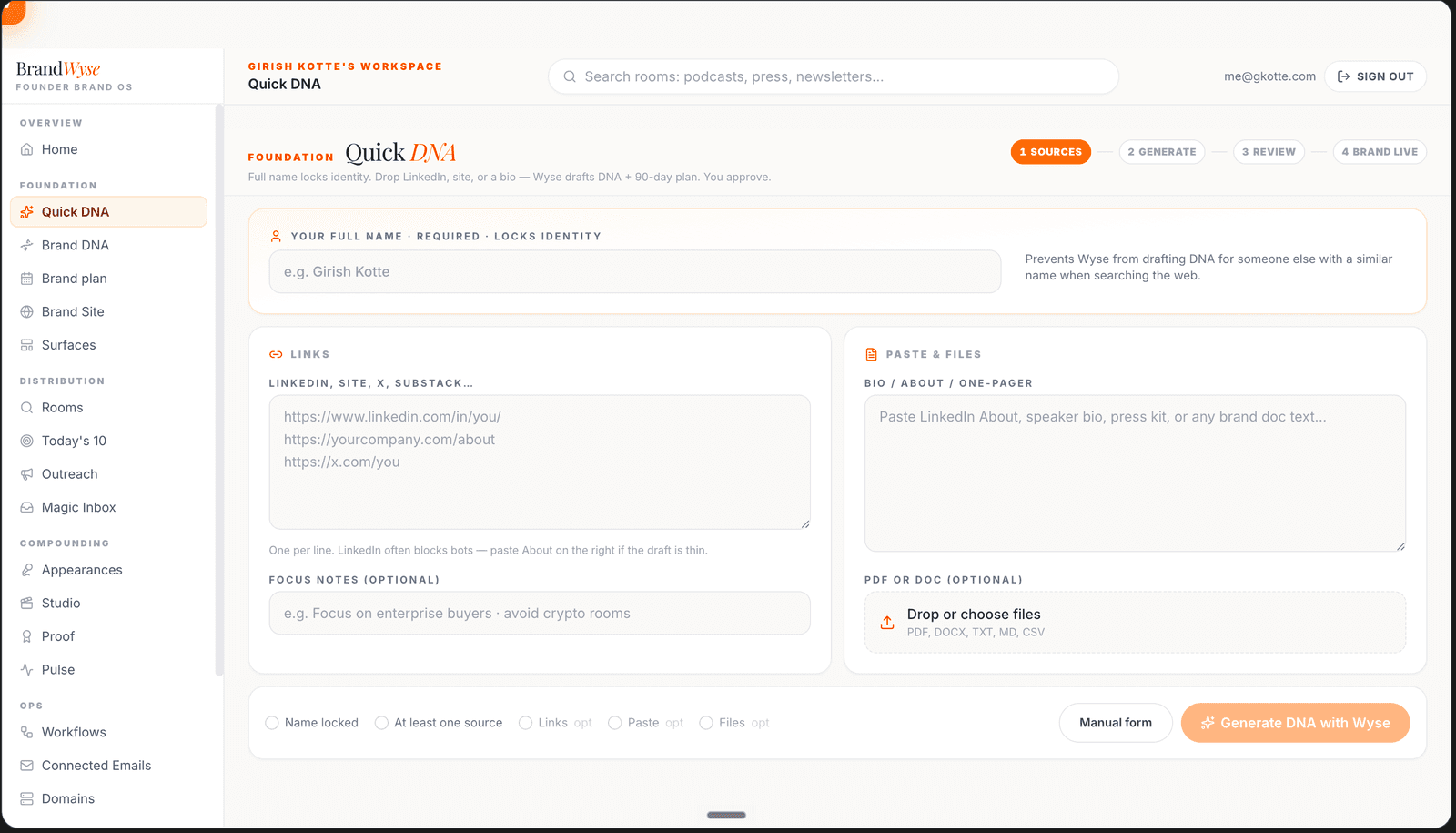
BrandWyse builds that brief from what you have already published rather than a blank questionnaire, which matters because most founders write better than they think they do and worse than they can describe. Once it exists, every agent on the platform writes from it, so the voice does not drift between a landing page and a cold email.

Done when
You can write the sentence from memory, and someone else on the team writes copy that sounds like you without asking.
Time to payoff
Same day.
Brand DNA from what already exists

Brand DNA from what already exists

The brief is assembled from things you have already written, so the voice is yours from the first draft rather than something you have to correct for a month.
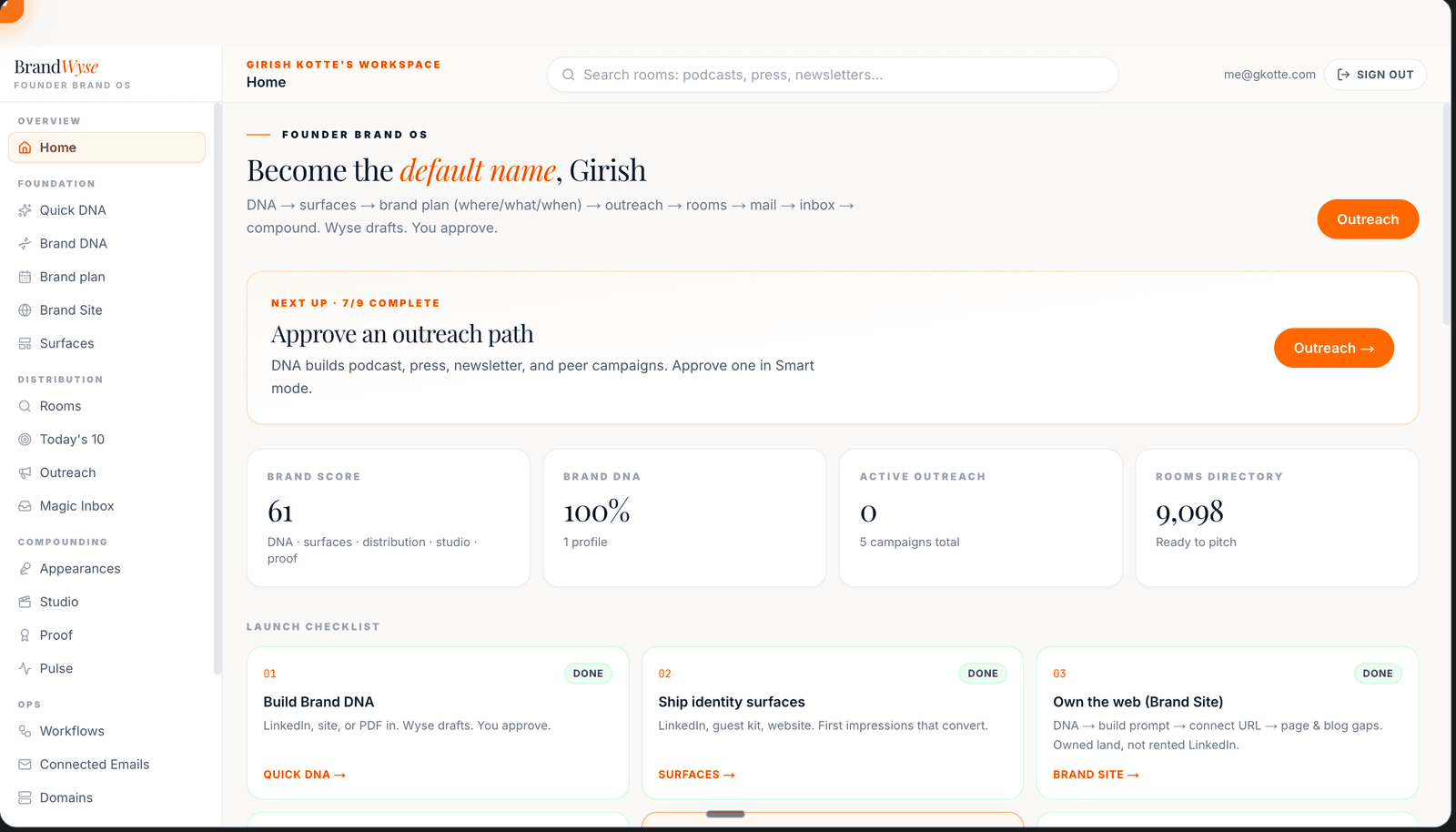
The Founder Brand OS

The Founder Brand OS

Positioning, voice and proof in one place that every other agent reads from. This is the file that stops a landing page and a cold email sounding like two different companies.
How BrandWyse handles this stage
Stage 02

Fix the catch before you throw anything

Every enquiry you already get lands somewhere, gets answered, and can book time without a phone call.

Why here
This is the stage people do last, and doing it last is why the traffic they buy in stage three converts badly. Sending more people at a leaky process is the most expensive mistake in this guide.

Before you generate a single new lead, find out what happens to the ones you already have. In most small businesses the honest answer is that some arrive by email, some by form, some by phone, and the follow-up depends on whether anyone remembers. That is not a CRM problem, it is a revenue leak, and it gets worse in exact proportion to how well the next stages go.

Two things fix most of it. Everything lands in one place with a record attached, and booking a call takes one click rather than an exchange of four emails about Tuesday.

The part that is easy to underrate is the morning. A pipeline is only useful if someone looks at it before the day fills up, so OpsWyse opens with what changed overnight and what deserves attention first, rather than a dashboard you have to interrogate.

Done when
Nothing arrives without a record, a booking link works end to end, and you can name the oldest untouched enquiry.
Time to payoff
Immediate. This one pays back the week you do it.
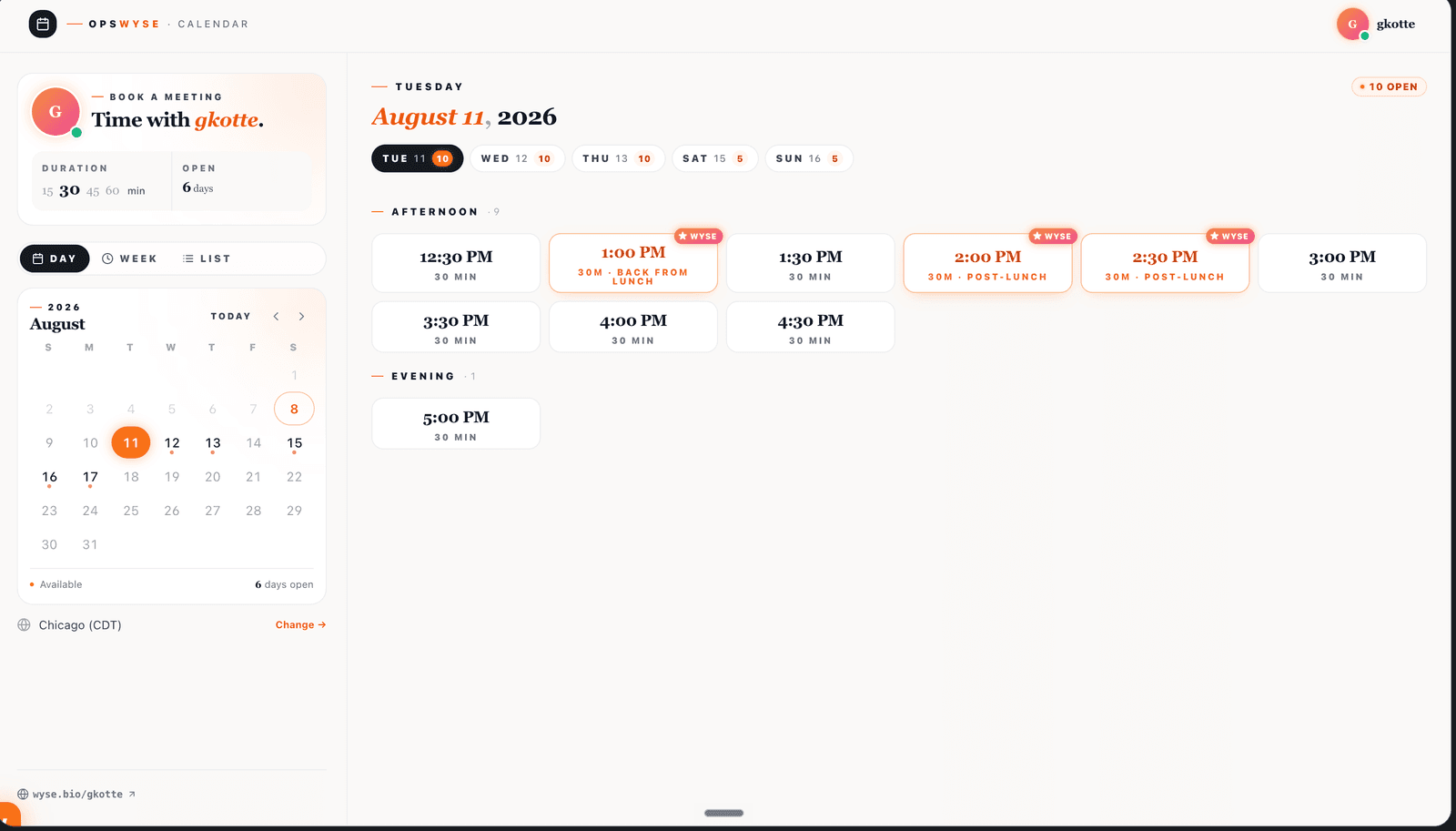
Scheduling that reads the pipeline

Scheduling that reads the pipeline

Booking attached to the deal it belongs to, so the confirmation and the follow-up already know what the meeting is about.

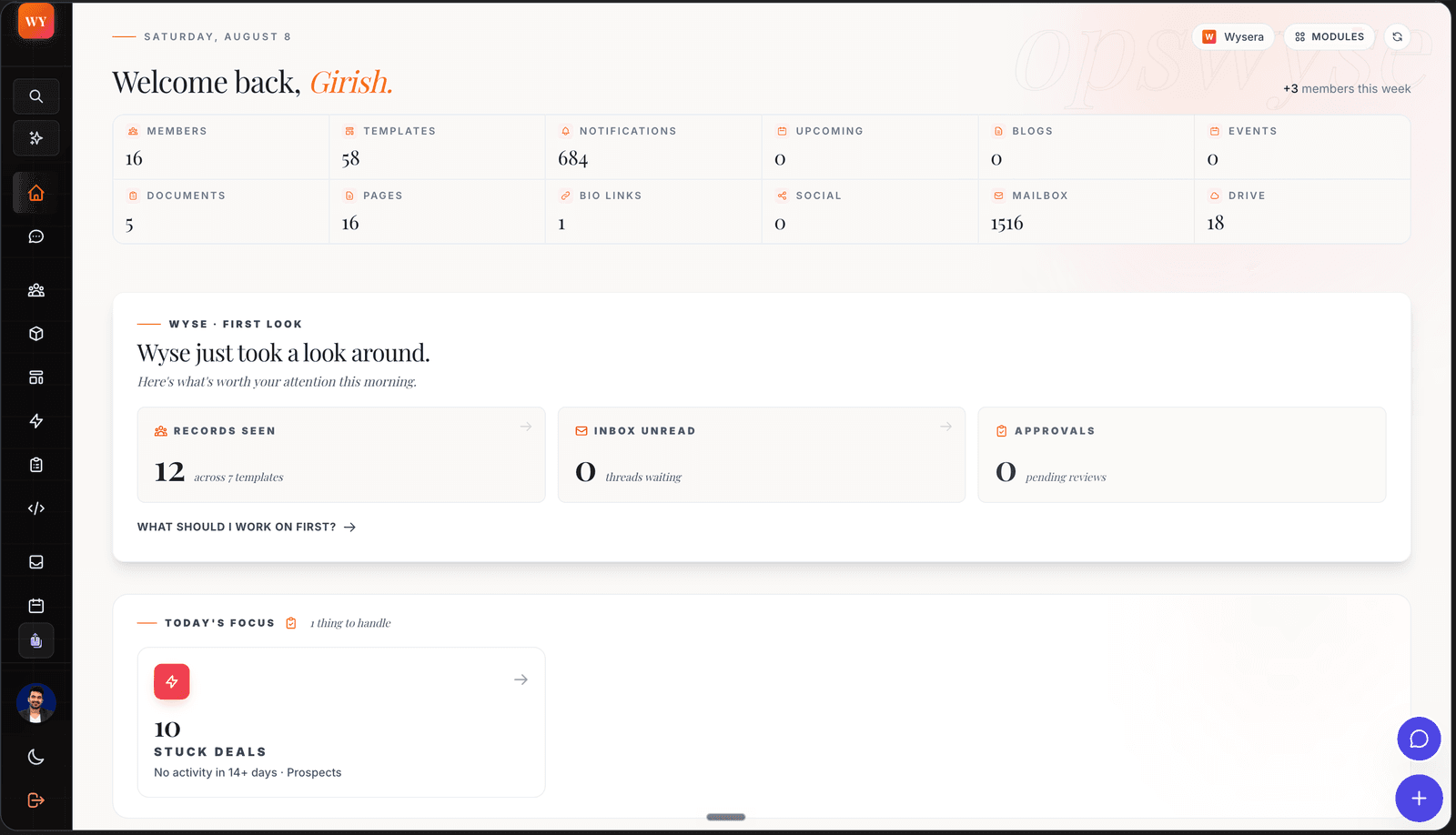
The morning briefing

The morning briefing

Wyse reads the workspace overnight and reports what changed: records it looked at, unread threads, approvals waiting, and the one thing worth handling first. Here it has surfaced ten deals with no activity in fourteen days.

One graph, not eleven tables

One graph, not eleven tables

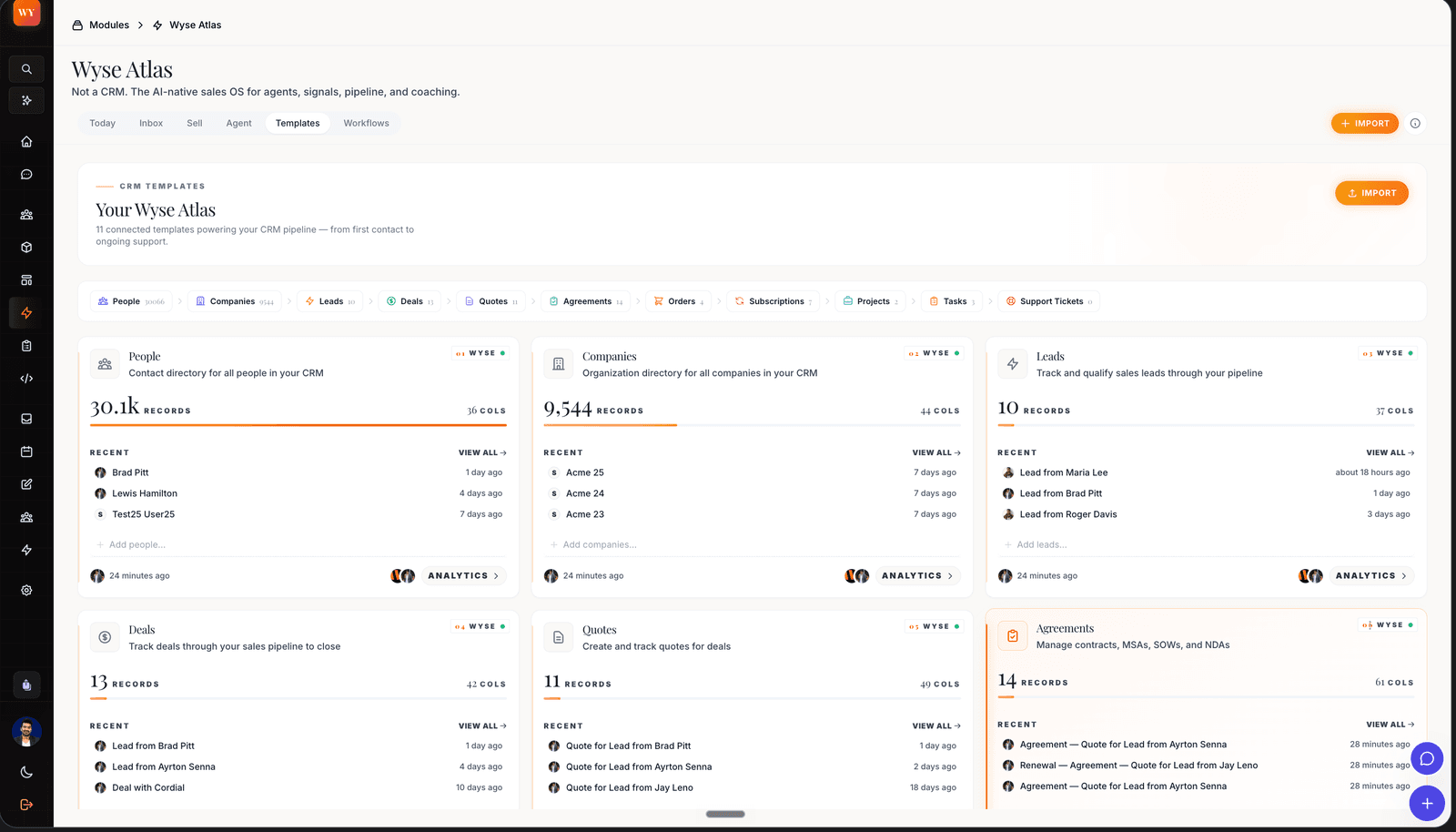
Contacts, deals, companies, tasks and threads connected, so a reply, a meeting and an invoice attach to the same relationship instead of living in three tools.

How OpsWyse handles this stage
Stage 03

Publish so people can find you without being chased

A steady flow of published work that answers what your buyers actually search.

Why here
It is the cheapest lead source you will ever own and the slowest to arrive, which is exactly why it has to start early. Every month you delay is a month pushed to the far end.

Search and content are one motion: publish something worth finding, consistently, and let it accumulate. The reason it fails is never the strategy. It is that the payoff arrives in month five while the work is due every week, and week three is where most plans quietly stop.

So the thing to optimise is not quality on any single piece, it is whether the rhythm survives a busy fortnight. That means the decision of what to write next should already be made when you sit down, and the draft should not start from an empty page.

PostWyse fills the calendar against real keyword opportunities, drafts in the voice from stage one, scores the draft for search before it publishes rather than after, and cuts the same piece into the social versions instead of asking you to write three things. It also tracks how the brand gets cited in ChatGPT, Claude and Perplexity, which is where a growing share of buyer questions now get answered.

Done when
You are publishing on a rhythm you have kept for eight weeks without heroics, and something you published is bringing people in.
Time to payoff
Three to six months before it compounds. Start it anyway.

Skip this if: You sell to a market of a few hundred named accounts. Nobody is searching for you. Go to stage four.

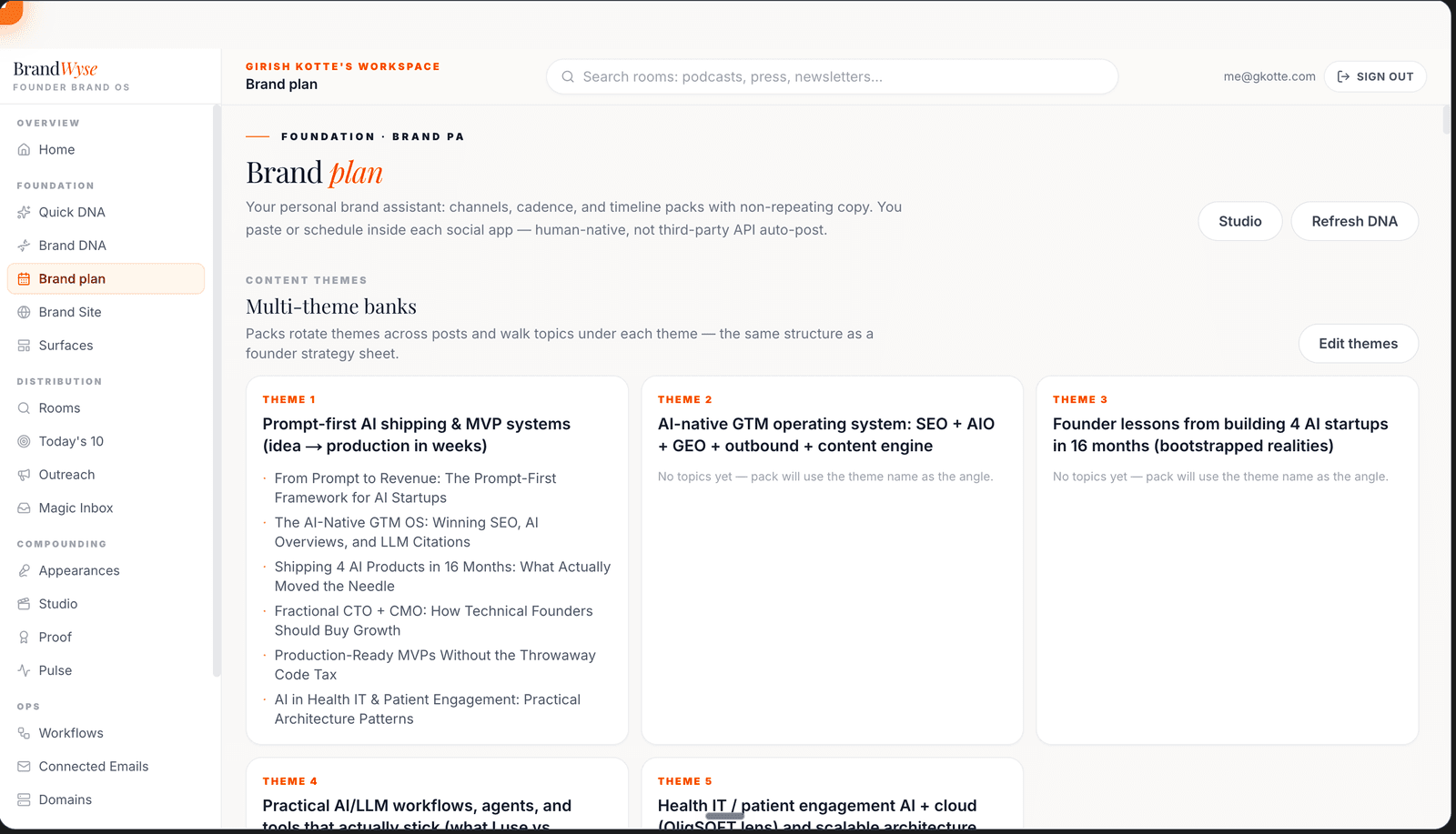
Theme banks, not an empty calendar

Theme banks, not an empty calendar

Recurring themes worth being known for, so the weekly question is which angle rather than what on earth do I post.

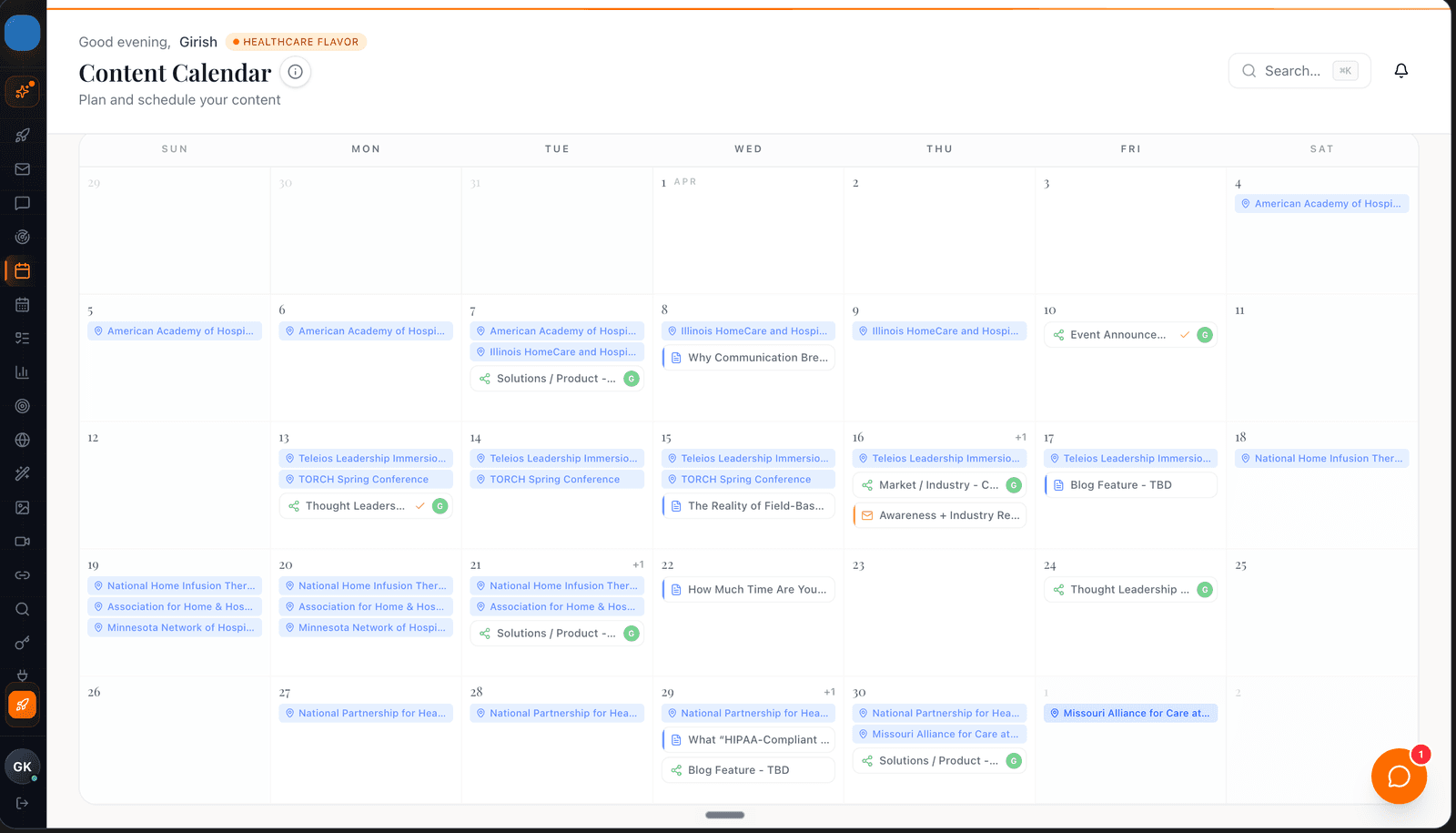
The content calendar

The content calendar

Planned, drafting, in review and scheduled on one board, with the agent filling gaps rather than leaving an empty week for someone to notice.

How PostWyse handles this stage
Stage 04

Go and get the ones who will never find you

A repeatable outbound motion where every reply lands somewhere and gets a second touch.

Why here
Outbound works far better once stages one and two exist. A cold email from a business with a clear position and a working booking link converts at a different rate to one without.

Outbound is three jobs pretending to be one strategy: find the people, send the sequence, and handle what comes back. Teams reliably resource the first two and forget the third, which is why so much outbound produces replies nobody follows up on.

The reply is the whole asset. A campaign that generates forty replies and answers twelve of them has not underperformed on volume, it has wasted the expensive part.

In OpsWyse the sequence, the pipeline and the reply sit on one record, and Wyse drafts each follow-up against the deal context, so the second message knows what the first one said. Nothing sends without approval, which matters more here than anywhere else on this page: outbound is where unsupervised automation damages a brand fastest.

Done when
A sequence runs weekly without you assembling it by hand, and no reply sits unanswered for more than a day.
Time to payoff
Two to six weeks, and it stops the moment you stop.

Skip this if: You have more inbound than you can answer. Fix stage two properly and come back when the pipeline is thin.

Automations described in a sentence

Automations described in a sentence

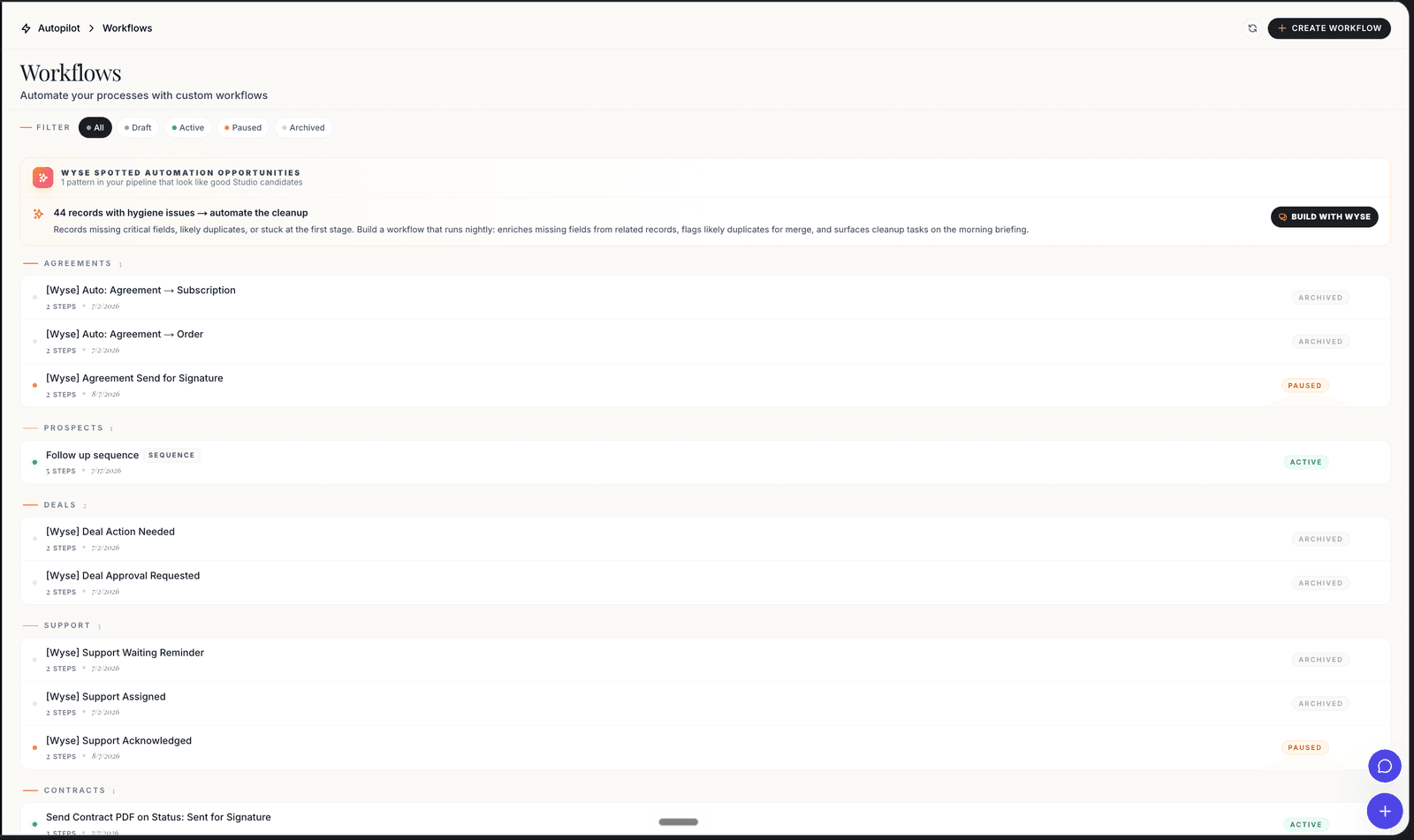
Describe the follow-up rule in plain language and the agent builds it, then waits for approval before it starts sending on your behalf.

How OpsWyse handles this stage
Stage 05

Make it compound: referrals and rooms

Leads that arrive pre-trusted, from customers who refer and rooms where your buyers already are.

Why here
This stage needs something to compound. Once stages two to four have produced customers and published work, referrals and authority multiply them. Started earlier, there is nothing to multiply.

Referrals convert better than any cold channel because the trust arrives before the conversation does. They are also the most likely of all these strategies to exist as an intention rather than a system, because asking feels awkward and tracking feels like admin.

The fix is to make the ask part of a moment that already happens, right after a good result, and to have somewhere for the referral to be recorded and rewarded. ReferWyse runs that side across the Wyse family, with the relationships held alongside everything else in OpsWyse.

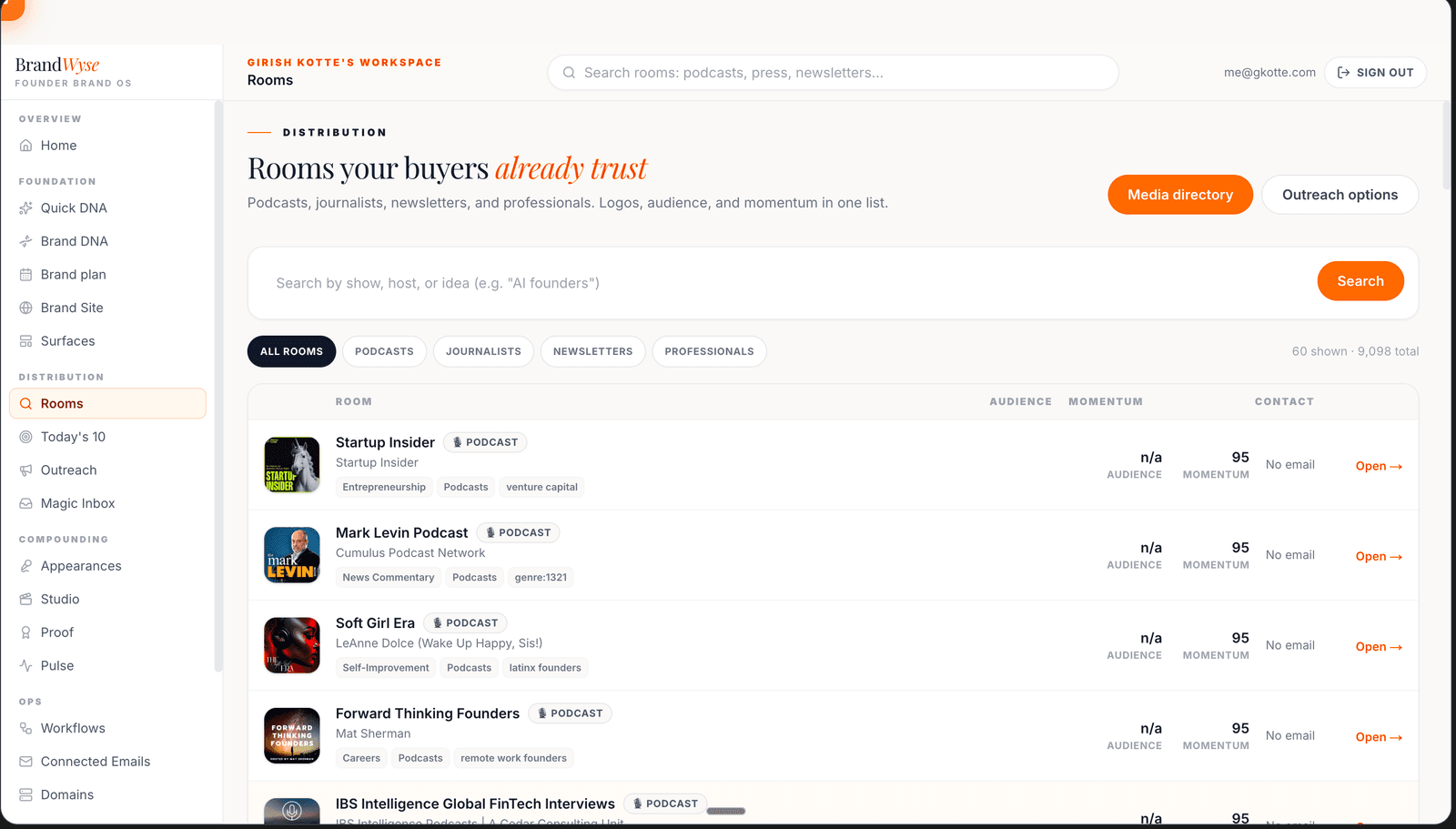
The other half of compounding is appearing where your buyers already gather. Traditional public relations means a retainer most small businesses cannot justify, so what replaced it is the founder showing up in other people's rooms: podcasts, newsletters, communities. BrandWyse keeps that as a working directory with contact routes rather than a spreadsheet somebody started once.

Done when
Asking for a referral is part of your process rather than a good intention, and you have appeared somewhere you did not own.
Time to payoff
Slow, then disproportionate. This is the stage that eventually replaces the others.
9,098 rooms worth being in

9,098 rooms worth being in

Podcasts, journalists, newsletters and professionals with audience and momentum scores and a contact route, so the pitch list is part of the product rather than a spreadsheet beside it.

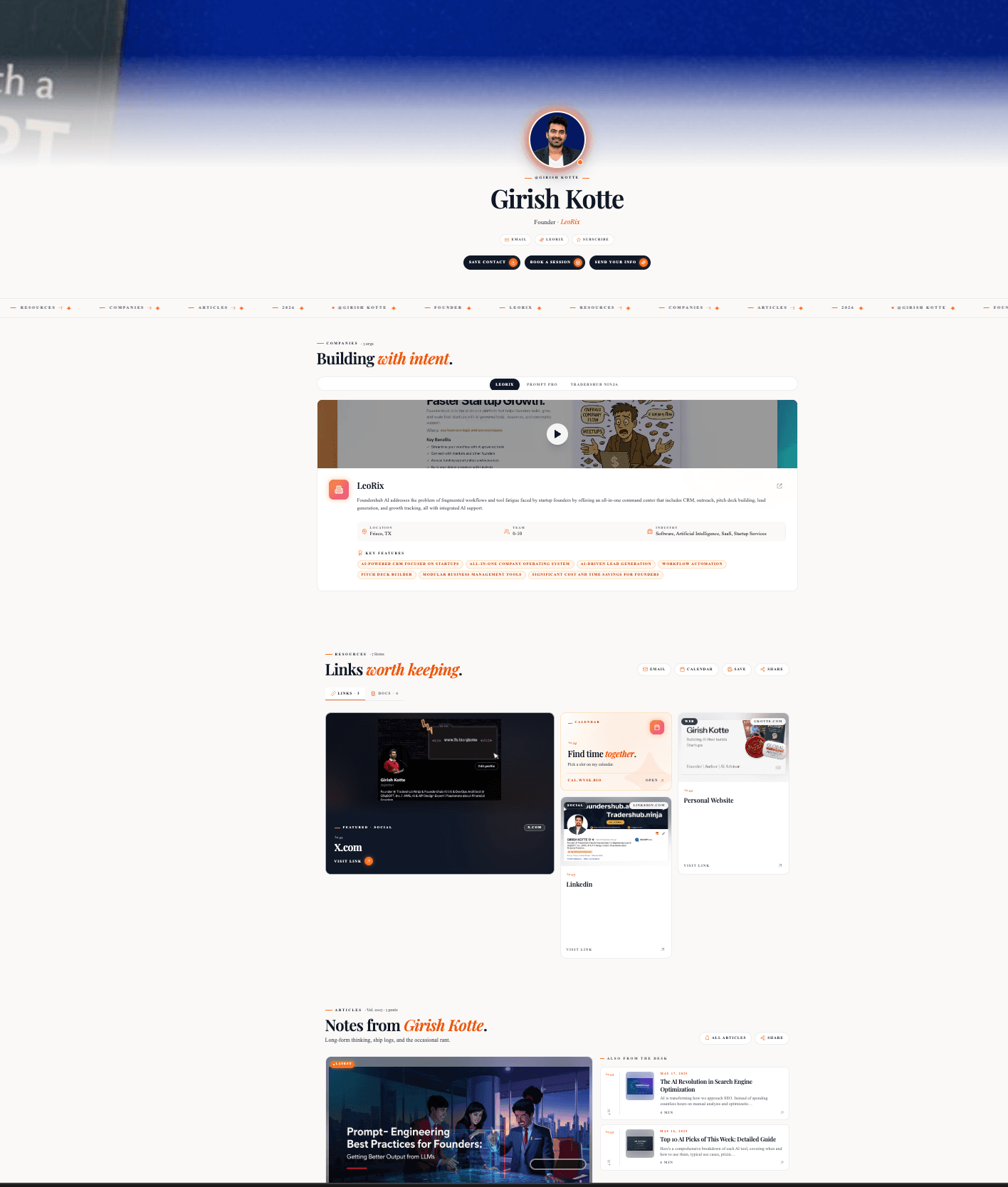
The page every bio link points at

The page every bio link points at

Assembled from the same brand DNA as stage one, so it stays current without being maintained by hand.

How ReferWyse and BrandWyse handles this stage
Stage 06

Only now, buy reach or hands

Paid channels and extra people added on top of a system that already works.

Why here
Last, deliberately. Paid traffic and hired help amplify whatever is already happening. Pointed at the earlier stages when they are broken, they amplify the leak and do it at a monthly rate.

Every stage above assumes a person. Not a tool, a person, with hours in the week to send the sequence, write the piece, chase the reply, and keep going in week three when nothing has happened yet. That is the real constraint in almost every small business and no amount of software removes it.

So when the system works and the bottleneck is genuinely capacity, there are two levers: buy attention, or buy hands. Buying attention first is the common mistake, because an ad account is easier to open than a hiring decision.

HireWyse is the hands version: experts matched to the channel running a focused campaign on the platform, with the tooling and ad stack included, a working handoff, and no lock-in. It exists because the operators we kept meeting never had a tool problem.

Done when
You know your cost per booked call from an unpaid channel, so you have something to compare a paid one against.
Time to payoff
Fast, and it stops the day you stop paying. That is the trade.
How HireWyse handles this stage

Once the six stages are running

Before you price the alternative, count it

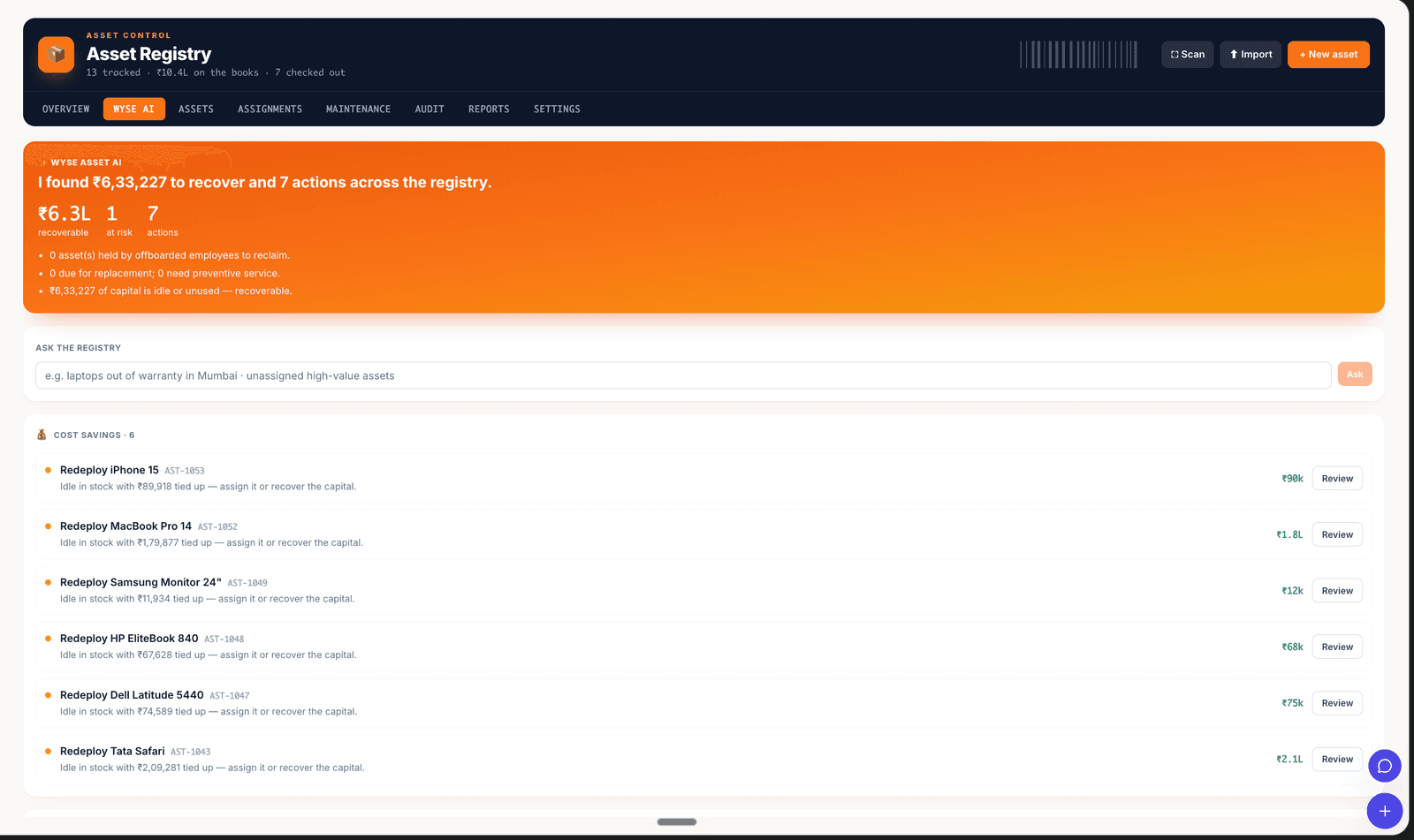
Most businesses cannot say what their stack costs, because the charges are spread across cards and renewal dates nobody owns. This is how you find out, and it sets up the next section.

Asset control with money attached

Asset control with money attached

Every tool, licence and subscription tracked with its cost. This is usually how a business finds out what its stack is really costing, which is the subject of the next section.

What it costs assembled

The same six stages, bought separately

Nothing above requires this platform. You can run all six stages from separate tools, and plenty of good businesses do. This is what that costs: one representative tool per job at each vendor's own cheapest published tier, grouped by the stage it belongs to.

One tool per job for each stage, with entry-tier monthly price
StageThe jobOne tool for itEntry
Decide who it is forBrand and content briefNo standard toolno tier
Fix the catch firstCRMPipedrive$14
Fix the catch firstMeeting bookingCalendly$10
PublishSEO researchAhrefs$129
PublishContent draftingJasper$49
PublishSocial schedulingBuffer$6
PublishEmail marketingMailchimp$13
Go and get the restProspect dataApollo$49
Go and get the restCold email sendingInstantly$37
Make it compoundFounder link pageLinktreeno tier
Make it compoundReferral softwareIts own categoryno tier
Only now, buy reachSomeone to run itAgency retainerno tier
Total, before a single extra seat8 subscriptions$307/mo

Three rows have no price because they have no cheap tier. Stage one has no standard tool at all, referral software is its own category with its own payout handling, and the person to run it is $1,500 to $5,000 a month at agency rates, which dwarfs every line above it.

The subscriptions are the visible cost. The invisible one is that they do not know about each other. The SEO tool cannot tell the writer what to draft, the sequencer cannot see that the lead already replied to a newsletter, and the CRM finds out about the webinar through a CSV somebody exports on Friday. Small businesses already run far more software than they use and waste about half of what they pay for, and every hand-maintained handoff is a place stage two quietly breaks again.

The case for one platform is not that any single module beats the best specialist. It does not, and we say so plainly in our Ahrefs comparison: there is no backlink index here, and anyone doing serious link work should keep a research tool. The case is that six stages run by one person need to share a brain.

Six stages, one login

BrandWyse decides who it is for, OpsWyse catches and follows up, PostWyse publishes, ReferWyse compounds it, and HireWyse brings the people when capacity is the constraint. One Wyse agent across all of it, drafting the work and waiting for your approval before anything ships.